

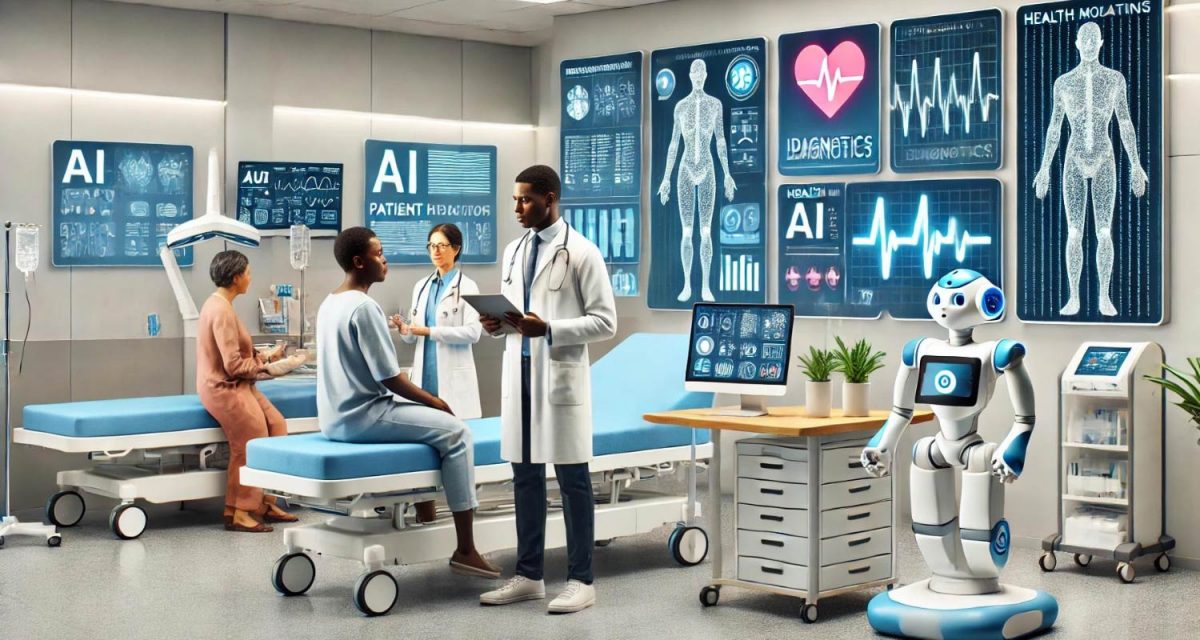
The modern medical field is undergoing an unprecedented digital shift, powered by the continuous integration of artificial intelligence across various clinical and operational domains. World superpowers and developing economies alike are pouring billions of dollars into deep learning models, natural language processing tools, and autonomous robotics to streamline administrative workflows, enhance diagnostic precision, and lower systemic operational costs. Rather than treating machine learning as a monolithic technology, global healthcare leadership now separates AI capabilities into distinct structural tiers ranging from low-risk administrative scribes and predictive clinical decision support engines to high-risk autonomous diagnostic platforms.
As population structures shift toward aging demographics and healthcare systems face chronic labor shortages, artificial intelligence offers an invaluable strategic lifeline. National strategies differ significantly based on unique local priorities:
-
Some countries prioritize capacity preservation and triage management to prevent public health overload.
-
Others lean heavily into commercial market dynamics, liability frameworks, and high-margin clinical equipment.
-
A third group emphasizes regulatory clarity, data sovereignty, and secure cloud infrastructure.
Understanding how sovereign nations implement these AI systems provides clear insight into the future of clinical medicine, bio-pharmaceutical engineering, and patient care delivery.
Major Applications Driving Global AI Adoption
A. Automated Clinical Documentation and Administrative Scribing
-
Medical professionals spend a massive fraction of their daily routines entering patient data into electronic health record databases.
-
Ambient voice intelligence systems listen to doctor-patient consultations in real time, extract key medical details, and convert conversations into formatted clinical notes.
-
Reducing administrative friction mitigates clinician burnout, increases weekly consultation capacity, and improves overall note accuracy.
B. Predictive Analytics and Early Clinical Decision Support Systems
-
High-throughput algorithmic models evaluate continuous streams of patient telemetry, lab results, and historical medical files.
-
Early warning indicators detect subtle biological shifts long before acute clinical symptoms emerge, such as tracking early sepsis markers or sudden cardiac decompensation.
-
Proactive risk assessments allow care units to intervene earlier, significantly reducing hospital mortality rates and shorten intensive care durations.
C. Diagnostic Imaging and Computer Vision Enhancement
-
Deep neural networks analyze complex visual data, including magnetic resonance imaging, computed tomography, and digital pathology slides.
-
Automated screening algorithms highlight micro-calcifications, tiny vascular blockages, and early-stage tumor growth with higher speed and accuracy than human eyes alone.
-
Secondary AI radiologist cross-checks lower diagnostic misinterpretation rates while clearing massive image review backlogs.
D. Precision Drug Discovery and Genomic Mapping
-
Traditional pharmaceutical development demands decades of laboratory trials and high capital investment.
-
Molecular generative models predict protein folding patterns, simulate drug-target interactions, and screen virtual compound libraries within days.
-
Genetic sequencing algorithms match patient genomic profiles with tailored therapeutic regimens, minimizing adverse drug reactions.
The United States: Market-Driven Commercial Scalability
The United States leads global healthcare AI venture investments, driven by high private sector funding, world-class academic research centers, and competitive market dynamics. American health networks emphasize scalable software products that lower administrative friction, streamline billing automation, and enhance overall clinical efficiency.
Infrastructure and Commercial Deployment
In the American ecosystem, health technology startups and tech giants collaborate closely with regional hospital networks. AI-powered billing automation tools analyze procedure documentation to lower claims denial rates, while ambient documentation systems reduce physician administrative burdens. Additionally, private health groups implement predictive risk models to anticipate readmissions and manage population health risks under value-based payment models.
Regulatory Frameworks and Liability
The United States Food and Drug Administration (FDA) evaluates medical software using continuous life-cycle clearance pathways tailored for software as a medical device (SaMD). Given the private insurance framework, liability, patient consent, and algorithmic transparency are paramount concerns. Hospitals must carefully balance rapid AI adoption with strict compliance under privacy regulations and algorithmic liability mandates.
The United Kingdom: National Capacity and Guidance-Led Implementation
The United Kingdom takes a public-first approach to medical artificial intelligence, using the National Health Service (NHS) as a centralized environment for technology rollout. Faced with severe staffing shortages and growing diagnostic backlogs, the UK leverages AI primarily to protect overall clinical capacity.
NHS Online and AI Triage Systems
To ease emergency department crowding, the UK integrates machine learning algorithms directly into primary consultation portals and triage hotlines. Intelligent symptom checkers and automated intake models direct non-emergency patients toward community care resources or local pharmacies, keeping urgent care facilities open for acute medical needs.
Regulatory Sandboxes and Safe Deployment
Through the Medicines and Healthcare products Regulatory Agency (MHRA), the UK utilizes specialized trial environments, such as regulatory “airlocks”. These controlled sandbox programs allow medical software tools to undergo live testing in select NHS trusts before receiving full commercial deployment authorization, keeping patient safety front and center.
Canada: Procurement Transparency and Regulatory Precision
Canada’s approach to medical AI emphasizes clear regulatory oversight, institutional procurement standards, and stringent patient data protections. Operating through a provincial single-payer framework, Canadian healthcare leadership prioritizes long-term safety, public trust, and rigorous data privacy over rapid market expansion.
Machine Learning-Enabled Medical Device Protocols
Health Canada has established comprehensive operational guidelines specifically designed for Machine Learning-Enabled Medical Devices (MLMD). These regulatory standards focus on post-market oversight, continuous algorithmic learning management, and mitigation of dataset bias. This ensures that AI systems maintain performance standards across diverse demographic groups.
Centralized Procurement Frameworks
To prevent unauthorized or unvetted software applications (“shadow AI”) from entering hospital networks, Canadian health organizations utilize unified procurement toolkits. These guidelines force health authorities to evaluate data security protocols, model transparency, and vendor liability before signing technology purchase agreements.
+------------------+----------------------------------+------------------------------------+
| Nation           | Primary Strategic Focus          | Key Regulatory Mechanism           |
+------------------+----------------------------------+------------------------------------+
| United States    | Market Innovation & Efficiency   | FDA SaMD Clearance & Liability     |
| United Kingdom   | System Capacity & Triage         | MHRA Regulatory Airlocks/Sandboxes |
| Canada           | Safe Procurement & Data Privacy  | Health Canada MLMD Framework       |
| Australia        | National Digital Integration     | TGA Mandatory Adverse Event Report |
+------------------+----------------------------------+------------------------------------+
Australia: National Digital Integration and Robust Governance
Australia is building a connected, nationwide digital health infrastructure by embedding AI systems directly into its existing electronic health network. Guided by the Therapeutic Goods Administration (TGA) and national health strategies, Australia balances aggressive innovation with strict oversight.
Integration with the National Digital Record
Australia works to connect clinical AI solutions directly into its “My Health Record” database. This nationwide integration allows diagnostic tools and decision support systems to access longitudinal patient histories seamlessly, driving better care continuity across both remote rural clinics and urban medical centers.
Software Tracking and Adverse Event Reporting
To ensure accountability, Australia maintains rigorous software tracking standards:
-
The TGA requires software creators to assign Unique Device Identification (UDI) tags to every medical AI algorithm deployed in clinical settings.
-
Australian hospital networks operate under mandatory reporting frameworks for AI-related incidents, ensuring swift national action if an algorithm displays clinical performance drift or error.
European Union: Ethically Aligned Safety Standards
European nations operate under unified digital privacy laws and risk-tiered regulatory frameworks designed to protect individual patient rights. Member states favor human-centric artificial intelligence that prioritizes patient autonomy, clear explanation of automated outcomes, and strict data protection standards.
High-Risk Classification Protocols
Under European regulation, machine learning algorithms that provide automated diagnostic recommendations, interpret radiologic images, or allocate acute care resources are classed as high-risk technologies. This designation requires software vendors to perform extensive clinical evaluations, demonstrate algorithmic transparency, and prove their models are free from underlying demographic biases before gaining market entry.
Cross-Border Health Data Ecosystems
The European Health Data Space framework establishes secure channels for sharing medical records across national borders. By building privacy-preserving data federations, European institutions enable researchers to train AI models on large, multi-country datasets without compromising individual privacy.
Asian Innovation Hubs: High-Density Deployment and Robotics
Nations across East Asia are rapidly advancing healthcare AI by pairing machine learning with advanced physical robotics and large-scale public data initiatives. High population densities, high broadband connectivity, and rapidly aging demographics drive swift adoption of automated medical technologies.
A. Japan: Autonomous Elder Care and Robotic Assistance
-
Japan’s demographic profile has accelerated the adoption of physical robotics and ambient monitoring tools in long-term care facilities.
-
Computer vision systems track patient movement to prevent accidental falls, while physical assist devices help care personnel with mobility tasks.
-
Machine learning algorithms analyze continuous sensor data to detect subtle health declines in isolated elderly individuals.
B. South Korea: High-Throughput Diagnostic Imaging and Smart Hospitals
-
South Korea leverages its digital infrastructure to power smart, fully connected hospital networks.
-
Nationally developed computer vision tools automatically analyze chest radiographs, mammograms, and dental imaging across outpatient networks.
-
Integrated medical platforms combine hospital databases with real-time room telemetry to optimize staff allocation and patient throughput.
C. China: Large-Scale Algorithmic Training and Rural Telemedicine
-
China uses its massive population base to train deep learning models on large, centralized datasets.
-
Telemedicine platforms powered by automated diagnostic engines bring virtual specialist advice to remote and underserved rural populations.
-
Public-private technology partnerships fuel rapid innovation in smart surgical tools and automated drug discovery platforms.
Key Operational Challenges in Global Medical AI Implementation
Despite rapid growth, integrating machine learning tools into clinical environments presents technical, ethical, and organizational challenges that require careful management.
Algorithmic Bias and Training Dataset Diversity
AI models inherit the characteristics and limitations of the clinical data used to train them. If a diagnostic algorithm is trained primarily on data from specific urban demographics, its accuracy may drop when applied to rural populations or distinct ethnic groups. Healthcare organizations must build diverse, representative training datasets to avoid compounding health disparities.
System Interoperability and Data Architecture
Legacy hospital information systems often rely on fragmented, proprietary data formats that prevent smooth communication between software tools. Achieving true interoperability requires universal adoption of standardized data transfer frameworks like Fast Healthcare Interoperability Resources (FHIR). Without standardized data structures, deploying AI tools across multiple hospital networks requires costly custom engineering.
Model Explainability and Clinical Validation
Many advanced deep neural networks operate as “black boxes,” making it difficult for clinicians to trace how an algorithm reached a specific conclusion. In high-stakes medical decisions, healthcare professionals are understandably hesitant to follow opaque recommendations. Developing explainable AI models that show clear clinical rationale is essential for building physician trust and adoption.
+------------------------------------+---------------------------------------------------+
| Implementation Challenge           | Strategic Mitigation Path                         |
+------------------------------------+---------------------------------------------------+
| Algorithmic Bias & Data Gaps       | Multi-center datasets & continuous bias audits    |
| Legacy System Fragmented Data      | Adoption of universal FHIR data standards         |
| Black-Box Model Decisions          | Implementation of explainable, white-box AI tools |
| Software Performance Drift         | Mandatory post-market tracking & UDI systems      |
+------------------------------------+---------------------------------------------------+
The Road Ahead: Future Trends in Medical AI
Over the coming decade, AI in healthcare will evolve from stand-alone analytical tools into continuous, ambient care environments.
A. Multi-Modal Foundation Models in Medicine
-
Next-generation medical AI systems will evaluate multi-modal inputs simultaneously, combining genomic data, clinical notes, lab results, and diagnostic imaging into a unified assessment model.
-
Comprehensive multi-modal understanding will give clinicians a complete view of a patient’s health status, driving highly personalized care plans.

B. Autonomous Closed-Loop Therapeutic Systems
-
Medical devices will increasingly move from passive monitoring to active, closed-loop treatment management.
-
Advanced insulin delivery networks already adjust real-time dosing based on predictive glucose tracking algorithms.
-
Similar closed-loop control systems will soon manage continuous medication delivery in intensive care units and operating rooms.
C. Decentralized Clinical Trials and Virtual Twins
-
Machine learning algorithms will synthesize virtual patient models (“digital twins”) using real-world health data to test therapeutic interventions in simulated environments before starting human clinical trials.
-
Digital twin technology will speed up drug candidate selection, lower research overhead, and minimize patient exposure to ineffective treatments.
D. Global Regulatory Alignment and International Standards
-
As AI tools cross national borders, global health bodies are working to harmonize regulatory expectations.
-
Universal standards for safety testing, data privacy, and continuous post-market surveillance will simplify global deployment while keeping patient safety paramount.
Conclusion
The integration of artificial intelligence into healthcare is fundamentally reshaping global medical infrastructure. While market-led economies prioritize commercial innovation and workflow efficiency, public health systems focus on preserving hospital capacity and scaling triage capabilities. Meanwhile, nations with unified digital health records demonstrate the power of centralized data integration combined with robust post-market oversight.
Ultimately, the goal of healthcare AI is not to replace human clinicians, but to give medical professionals powerful computational tools that eliminate administrative burdens, speed up diagnostic decisions, and deliver safer, more equitable patient care. Nations that successfully balance rapid innovation with safe regulatory governance will lead the global future of medicine.