
The global trading landscape is experiencing its most radical structural transformation since the establishment of the World Trade Organization (WTO) in 1995. For decades, the movement of goods, services, capital, and intellectual property across borders operated under a predictable, rules-based multilateral system. Built upon the foundational principles of Non-Discrimination, Most-Favored-Nation (MFN) treatment, and binding dispute resolution, this system lowered barriers and fueled an unprecedented surge in worldwide integration.
However, recent geopolitical fractures, economic nationalism, supply chain vulnerabilities, and escalating technological rivalries have dismantled those traditional norms. A profound paradigm shift is underway—moving away from pure economic efficiency and cost-minimization toward strategic autonomy, national security, domestic industrial dominance, and structural resilience. Understanding how nations now trade policy shifts is no longer merely an academic exercise for economists; it is an urgent strategic mandate for global business leaders, supply chain executives, institutional investors, and policymakers navigating an increasingly fragmented global economy.
1. The Catalysts Behind Modern Trade Realignment
The dismantling of the traditional global trading system did not occur overnight. It is the result of cumulative geopolitical and structural pressures that have fundamentally altered how national governments perceive the balance between economic openness and state security.
A. Weaponization of Interdependence and Supply Chains
The concentration of critical manufacturing, active pharmaceutical ingredients (APIs), rare earth elements, and advanced semiconductor packaging within specific geographical regions exposed extreme strategic vulnerabilities during global crises. National leaders realized that hyper-optimized, “just-in-time” international supply chains could easily be weaponized through export controls, coercive tariffs, and diplomatic pressure. Consequently, statecraft now prioritizes supply chain security over short-term financial efficiency.
B. Industrial Policy and State-Directed Capitalism
The era of minimal state intervention in commercial markets has given way to aggressive industrial policies. Major economic blocs are deploying massive public subsidies, tax incentives, and domestic content requirements to build sovereign capacities in clean energy, artificial intelligence, biotechnology, and quantum computing. These massive subsidies create systemic trade frictions, as competing nations enact retaliatory tariffs and counter-subsidies to defend their domestic market shares.
C. Geopolitical Multipolarity and Strategic Rivalry
The intense technological and economic competition between the United States and China, alongside escalating regional conflicts, has fragmented the international trade architecture. Geopolitics now dictates commercial alliances. Sanctions, secondary restrictions, and strict screening mechanisms for both inward and outward foreign direct investment (FDI) have transformed international trade compliance from a operational detail into a major strategic priority.
2. Key Pillars of Current Trade Policy Shifts
Governments around the world are fundamentally rewriting their foreign trade doctrines. These policy shifts manifest across several operational dimensions that redefine cross-border commerce.
+-------------------------------------------------------------------------------+
|                    PILLARS OF MODERN TRADE REALIGNMENT                         |
+-----------------------------------+-------------------------------------------+
| Direct Structural Tariff Shifts   | Unilateral duty hikes, sector surcharges  |
| Friend-Shoring & Reshoring        | Nearshoring, supply chain re-alignment    |
| Advanced Export Controls          | Critical technology and IP protection     |
| Non-Tariff Trade Barriers         | Environmental rules, carbon adjustment    |
| Strategic Bilateralism            | Regional pacts bypassing multilateralism |
+-----------------------------------+-------------------------------------------+
A. Direct Tariff Restructuring and Reciprocal Measures
The reliance on predictable, bound tariff rates administered under multilateral frameworks has largely given way to unilateral tariff adjustments, selective duty hikes, and aggressive reciprocal measures. Major economies are increasingly leveraging high import duties not only as revenues or domestic market protections, but as economic leverage to compel foreign trading partners to grant bilateral concessions, remove regulatory barriers, or restrict commerce with third parties.
B. Nearshoring, Friend-Shoring, and Supply Chain Decoupling
To reduce exposure to geopolitical tensions and unpredictable trade barriers, global enterprises are restructuring their production networks. “Friend-shoring”—the policy of restricting sourcing and manufacturing to allied nations with shared strategic values—has replaced indiscriminate global sourcing. Simultaneously, nearshoring has driven massive industrial investments into regional manufacturing hubs located close to end-consumer markets.
C. Advanced Export Controls and Tech Protectionism
Nations are increasingly applying tight restrictions on the export of advanced dual-use technologies, advanced machinery, semiconductor design software, and high-performance computing hardware. These non-tariff barriers are designed to maintain technological dominance and protect national security, effectively creating distinct, segregated technological ecosystems globally.
D. Climate Policy as a Trade Regulator
Environmental regulations have become central to international trade rules. Policies such as carbon border adjustment mechanisms impose duties on carbon-intensive imports like steel, aluminum, cement, and fertilizers entering strictly regulated markets. This ensures domestic manufacturers operating under tight emissions mandates are not undercut by foreign competitors subject to weaker environmental standards.
3. Regional Breakdown: How Major Economic Blocs Are Adapting
The global execution of these trade policy changes varies across key economic jurisdictions, creating a complex, multi-speed regulatory landscape.
A. The United States: Assertive Protectionism and Strategic Deal-Making
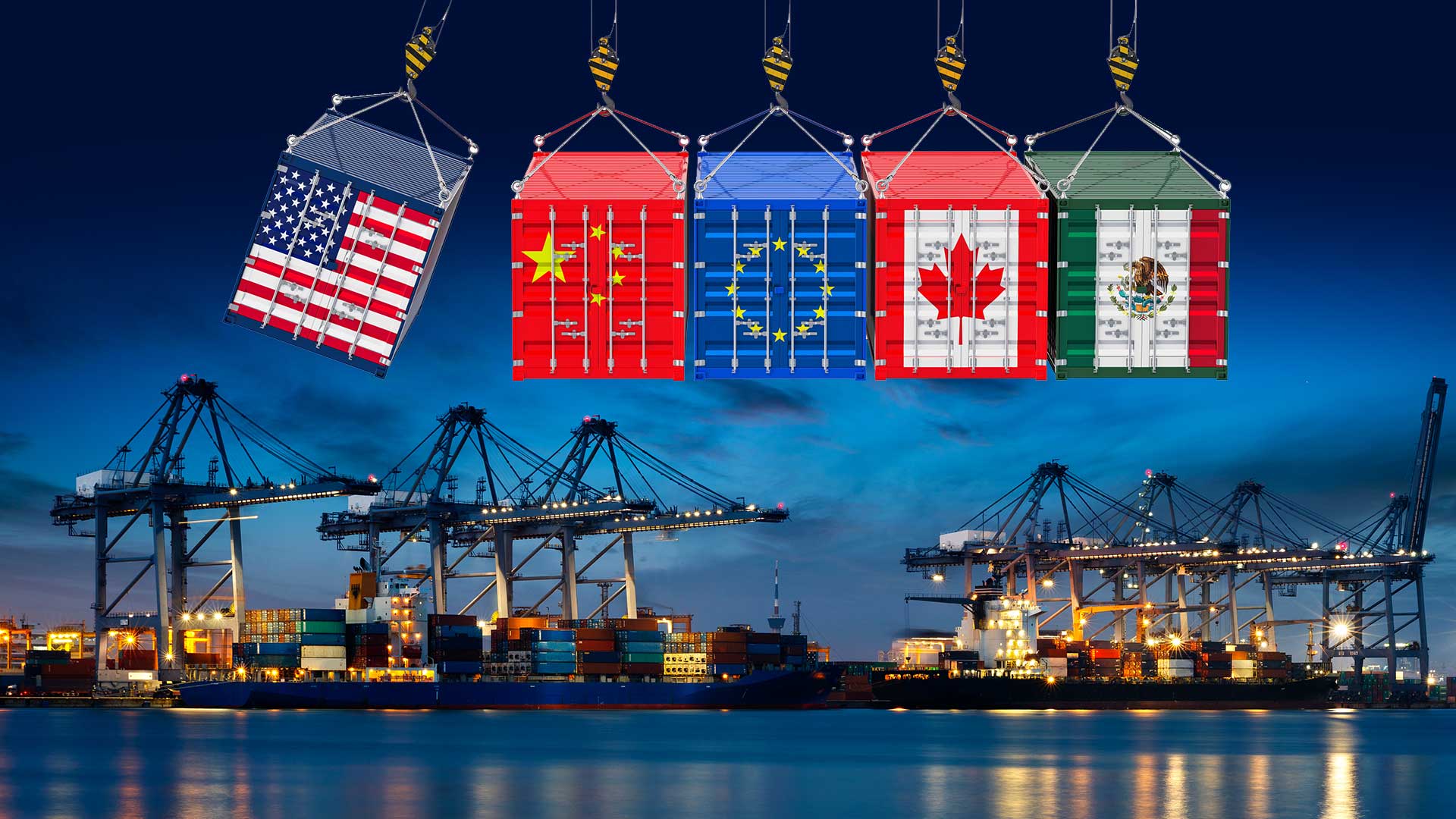
The United States has firmly embedded trade policy within its broader foreign policy and national security frameworks. Moving away from traditional comprehensive free trade agreements (FTAs), Washington favors targeted trade corridors, unilateral tariff enforcement, reciprocal market demands, and rigorous enforcement of labor and environmental standards. Preference is consistently given to domestic production alongside high tariffs on key strategic sectors including electric vehicles, solar infrastructure, advanced batteries, and steel.
B. The European Union: Regulatory Assertiveness and Strategic Autonomy
The European Union continues to advocate for a rules-based system while building robust trade defense tools. Brussels has established sophisticated anti-coercion regulations, strict foreign subsidy screening, and stringent supply chain due diligence mandates targeting human rights and environmental deforestation. To secure raw materials and offset transatlantic trade tensions, the EU is aggressively expanding bilateral agreements across Latin America, Asia-Pacific, and Africa.
C. China: Market Diversification and Supply Chain Centrality
Faced with escalating Western export controls and steep tariff hikes, China is actively reorganizing its commercial pathways. Beijing is deepening its economic integration with the Global South, expanding trade through the Regional Comprehensive Economic Partnership (RCEP), and channeling exports into Southeast Asia, Africa, Latin America, and the Middle East. Furthermore, China maintains strong dominance over critical mineral processing and clean technology manufacturing, reinforcing its central position in global value chains despite Western decoupling efforts.
D. Emerging Markets: Strategic Autonomy and Regional Hubs
Developing economies in Southeast Asia, Latin America, and South Asia are navigating this shifting terrain by positioning themselves as neutral manufacturing alternatives. Countries such as Vietnam, Mexico, Indonesia, India, and Malaysia are attracting foreign direct investment from Western and Chinese multinational corporations looking to bypass trade barriers. These nations are pursuing flexible, multi-aligned trade agreements that allow them to balance relationships across competing superpowers.
4. Sectoral Analysis: Key Industries Impacted by Trade Policy Shifts
The restructuring of trade policies affects global industries unevenly, creating distinct winners and losers across various economic sectors.
+-------------------------------------------------------------------------------+
|                    SECTOR-SPECIFIC TRADE DYNAMICS                             |
+-------------------+-----------------------------------------------------------+
| Technology & AI   | Export controls on hardware, legacy chip tariffs          |
| Clean Energy      | Local-content mandates, tariffs on solar/batteries        |
| Automotive        | Electric vehicle tariffs, supply chain rules-of-origin    |
| Agriculture       | Shift in sourcing corridors, retaliatory duties           |
| Critical Minerals | Export bans, sovereign stockpile requirements             |
+-------------------+-----------------------------------------------------------+
A. Technology and Semiconductor Ecosystems
The technology hardware sector faces unprecedented regulatory oversight. Governments treat advanced microchips, AI infrastructure, and telecommunications machinery as vital sovereign assets. As a result, cross-border research collaborations, technology transfers, and semiconductor equipment shipments are heavily scrutinized, forcing technology companies to build parallel supply chains and localized technological platforms.
B. Automotive and Electric Vehicle (EV) Value Chains
The automotive industry is undergoing an intense, policy-driven transformation. Steep tariffs on imported electric vehicles, stringent rules-of-origin requirements under regional trade pacts, and domestic production subsidies are forcing automakers to establish battery cell production and vehicle assembly within regional sales markets.
C. Agriculture and Food Commodities
Agricultural trade flows are shifting dynamically in response to tariff changes and geopolitical realignments. Importers are diversifying their suppliers to hedge against sudden policy shifts, while exporters are modifying pricing structures to remain competitive under fluctuating tariff rates. Product sectors such as wine, grain, and meat are experiencing rapid shifts in market share as relative preferential tariff margins fluctuate globally.
D. Critical Minerals and Raw Materials
Lithium, cobalt, nickel, copper, and rare earth elements sit at the intersection of energy transition and national defense. Resource-rich nations are moving away from exporting raw ores, implementing export bans or heavy duties to compel foreign mining firms to invest in domestic refining and processing infrastructure.
5. Strategic Playbook for Businesses and Supply Chain Executives
Navigating a world where trade policy shifts are frequent and unpredictable requires corporate agility, proactive compliance, and structural flexibility. Organizations must re-engineer their international operations to protect margins and secure supply continuity.
┌─────────────────────────────────────────────────────────────────────────┐
|                  CORPORATE RESILIENCE STRATEGY FRAMEWORK                 |
├─────────────────────────────────────────────────────────────────────────┤
|                                                                         |
|  1. DYNAMIC MAPPING       -->  Map Tier-1 through Tier-N supply lines   |
|                                Identify hidden geopolitical risks       |
|                                                                         |
|  2. GEOGRAPHIC "CHINA+1"  -->  Expand production to secondary nodes     |
|                                Mitigate single-origin tariff shocks     |
|                                                                         |
|  3. TARIFF OPTIMIZATION   -->  Utilize bonded warehouses and FTZs       |
|                                Audit Harmonized System (HS) codes       |
|                                                                         |
|  4. REAL-TIME COMPLIANCE  -->  Automate export control screenings       |
|                                Monitor dynamic sanctions registers      |
|                                                                         |
|  5. SCENARIO PLANNING     -->  Model sudden duty escalations            |
|                                Build flexible procurement contracts     |
|                                                                         |
└─────────────────────────────────────────────────────────────────────────┘
A. Comprehensive Multi-Tier Supply Chain Visibility
Most corporate supply chain disruptions occur deeper down the value chain—at Tier-2, Tier-3, or sub-tier raw material suppliers. Organizations must map their end-to-end supply networks to identify dependencies on regions subject to tariff escalations, sanctions, or environmental trade restrictions. Real-time visibility enables companies to anticipate policy disruptions before they halt manufacturing.
B. Implementation of “China Plus One” and Multi-Hub Strategies
To mitigate tariff shocks and regulatory restrictions, enterprises are adopting multi-hub manufacturing strategies. By maintaining primary operations in high-capacity locations while establishing secondary production nodes in Southeast Asia, Eastern Europe, or Latin America, businesses gain the operational flexibility to reroute production volumes as policy environments evolve.
C. Advanced Tariff Engineering and Customs Optimization
Companies must audit their product classifications, Harmonized System (HS) codes, and valuation methodologies to ensure full compliance while utilizing legitimate trade benefits. Utilizing foreign trade zones (FTZs), bonded warehouses, duty drawback programs, and strategic rules-of-origin compliance enables firms to reduce unnecessary tariff expenditures.
D. Agility and Dynamic Scenario Modeling
Corporate procurement strategies must transition away from long-term, rigid supply commitments toward flexible, dynamically priced contracts. Supply chain managers should continuously stress-test their operational models against diverse trade scenarios—such as unexpected tariff surges, sudden export bans, or localized transport blockades—to ensure rapid pivot capabilities.
6. Macroeconomic and Geopolitical Implications
The cumulative effect of these protectionist trade policies extends far beyond corporate supply chains, altering long-term macroeconomic metrics and international relations.
| Macroeconomic Metric | Historical Globalized Baseline | Modern Fractured System Outlook |
| Global Inflation | Structural disinflation driven by cheap global labor | Upward pressure due to duplicated supply chains and tariffs |
| Capital Allocation | Pure ROI and cost-driven efficiency | Geopolitically risk-adjusted capital deployment |
| Global Growth Dynamics | Rapid, synchronized international trade expansion | Regionalized growth with localized supply cycles |
| Dispute Settlement | Centralized WTO appellate body enforcement | Bilateral deal-making and regional tribunal rulings |
A. Structural Inflationary Pressures
The global economic integration of previous decades acted as a powerful disinflationary force, lowering consumer prices globally. The current fragmentation, duty hikes, and supply chain redundancy build structural cost floors into global manufacturing. Higher tariff burdens, combined with duplicated capital infrastructure, mean businesses must either absorb lower profit margins or pass cost increases on to end consumers.

B. The Marginalization of Multilateral Governance
The institutional authority of the World Trade Organization faces unprecedented challenges. With its appellate body functionally incapacitated and major economic powers increasingly bypassing its framework to sign non-binding bilateral memorandums, international commercial dispute resolution is becoming increasingly fragmented. Power dynamics are shifting from universal rule-based enforcement toward raw economic leverage and opportunistic, transactional deal-making.
C. The Rise of Regional Trading Blocs
As multilateral pathways stall, regional and plurilateral economic pacts are filling the vacuum. The African Continental Free Trade Area (AfCFTA), the Comprehensive and Progressive Agreement for Trans-Pacific Partnership (CPTPP), and RCEP are serving as new engines for trade growth. Regional trade corridors are expanding faster than traditional trans-oceanic routes, strengthening economic integration within geographic neighbor groups.
7. Future Horizons: What Lies Ahead for International Trade
Looking forward, the global economy will not return to the frictionless trade models of the late 20th century. Instead, the global trading architecture is evolving into a more complex, multi-tiered structure characterized by specific structural features:
A. Geopolitical Multiplexing
Global commerce will increasingly operate through a network of overlapping, sector-specific trade agreements. Nations will maintain tight security ties and technology controls with one group of allies while simultaneously engaging in pragmatic commercial trade with economic rivals, avoiding exclusive allegiance to any single superpower bloc.
B. AI and Digital Trade Regulation
The explosion of generative artificial intelligence and cross-border digital services is creating new regulatory frontiers. Debates over data sovereignty, cross-border data flows, source code access, and AI hardware export limitations will define future international trade negotiations, making digital trade policy as critical as physical customs policy.
C. Sustainable Industrial Integration
The intersection of climate targets and trade strategy will deepen. Nations that master green technology, secure sustainable critical mineral refining, and establish verified carbon tracking will gain significant competitive advantages in the global marketplace.
In conclusion, nations now trade policy shifts reflect a fundamental reorganization of global commerce. While protectionist measures, tariffs, and regulatory barriers pose substantial operational challenges, they also create immense opportunities for agile, forward-looking organizations. Companies that adapt quickly by building resilient, diversified, and transparent international operations will succeed in this new era of global economics.